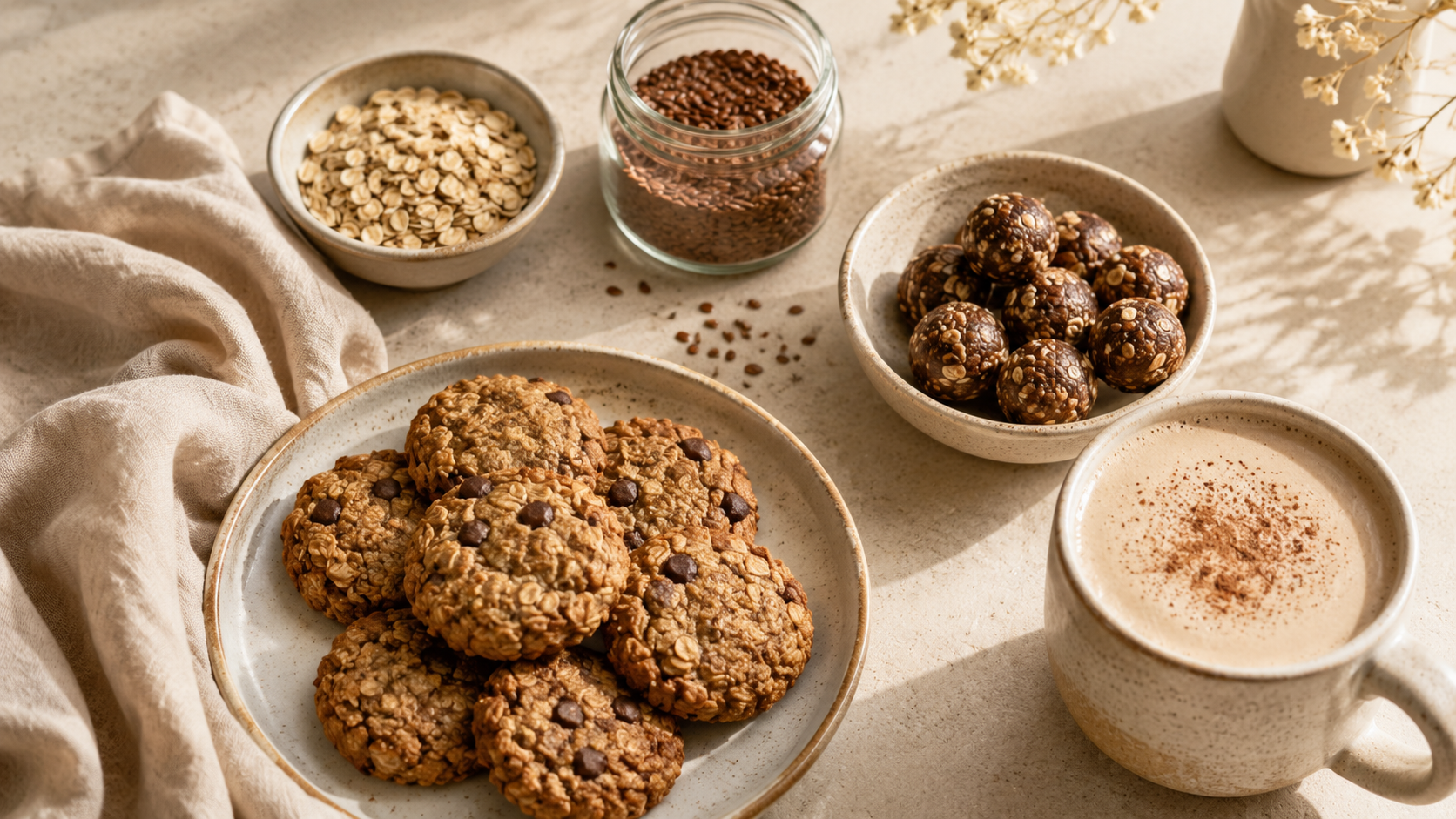
Breastfeeding is hard, and it got so much harder for me the second time around. With my second baby my supply just would not come in, and those early weeks were some of the most anxious of my life. What turned it around was not a magic food. It was frequent feeding, real help from a lactation consultant, and keeping myself fed and hydrated enough to keep going. These snacks were part of that last piece, so here are the ones I made on repeat, plus a few ready-to-buy options for the days baking is not happening.
A quick heads-up. A few of the links below are affiliate links, so if you buy through one I may earn a small commission at no extra cost to you. As an Amazon Associate I earn from qualifying purchases. I only recommend things I would actually keep in my own kitchen. See our full affiliate disclosure any time.
When you are feeding around the clock, the right snacks quietly do two jobs: they help you eat enough and stay hydrated, which matter far more for supply than any single magic ingredient. If a cookie could fix supply on its own, believe me, I would have eaten the whole tray. Make a batch once, then grab it one-handed at 3am.
Do lactation foods actually work?
Here is the part nobody loves to hear. Milk supply is driven mostly by how often and how well milk is removed from the breast. The more your baby feeds, or the more you express, the more milk your body makes. That is the real engine of supply, and it is the thing I wish someone had drilled into me sooner.
Foods marketed as galactagogues, meaning things thought to boost milk, have limited and mixed evidence. Some parents feel they notice a difference, others do not. What is not in doubt is that recovering from birth and feeding a newborn takes a lot of energy and fluid. So the best way to think about these recipes is as genuinely nourishing snacks that make it easier to eat and drink enough, with a few traditional ingredients folded in. If they give you a confidence boost too, that is a welcome bonus.
The key ingredients
- Rolled oats. Filling, rich in iron, and the backbone of almost every lactation snack.
- Ground flaxseed. Adds fiber and healthy omega-3 fats. Buy it ground, since whole seeds pass through undigested.
- Brewer’s yeast. The traditional lactation cookie ingredient, rich in B vitamins. Look for debittered brewer’s yeast, not baking yeast, which is not the same thing.
- Nut butters and seeds. Peanut or almond butter, plus pumpkin or sesame seeds, add protein and steady energy.
One ingredient to approach with care is fenugreek. It is a popular galactagogue, but it can cause digestive upset, may affect blood sugar, and is not suitable for everyone. Check with your provider before using fenugreek supplements, and you do not need it for any of the recipes here.
Classic lactation oatmeal cookies

The original, and still the best. They keep for several days in a tin and freeze well, so make a double batch. Makes about 24 cookies.
- 1 cup butter, softened
- 1 cup brown sugar
- 2 eggs
- 1 teaspoon vanilla extract
- 2 tablespoons ground flaxseed mixed with 4 tablespoons water
- 2 cups rolled oats
- 1.5 cups all-purpose flour
- 3 tablespoons debittered brewer’s yeast
- 1 teaspoon baking soda
- 1 cup chocolate chips
Heat the oven to 350F (175C) and line two trays. Stir the flaxseed into the water and let it sit for 5 minutes until it thickens. Cream the butter and sugar, then beat in the eggs, vanilla, and flax mixture. Separately combine the oats, flour, brewer’s yeast, and baking soda, then fold the dry into the wet and stir through the chocolate chips. Drop spoonfuls onto the trays and bake for 10 to 12 minutes until golden at the edges.
No-bake lactation energy bites

No oven required, which is exactly what you want in the early weeks. Roll them, chill them, and grab two when you sit down to feed. Makes about 20 bites.
- 1.5 cups rolled oats
- 0.5 cup peanut or almond butter
- 0.33 cup honey or maple syrup
- 0.25 cup ground flaxseed
- 2 tablespoons debittered brewer’s yeast
- 0.5 cup chocolate chips or chopped dried fruit
- A pinch of salt
Stir everything together in one bowl until it holds, adding a splash of milk if it feels dry. Chill for 20 minutes so it firms up, then roll into bite-sized balls. Store in the fridge for up to a week, or freeze.
Overnight oats for busy mornings

Assemble it the night before and breakfast is ready when you finally have a free hand. Makes 1 generous serving.
- 0.5 cup rolled oats
- 0.5 cup milk of your choice
- 1 tablespoon ground flaxseed
- 1 tablespoon nut butter
- 0.5 mashed banana or a handful of berries
- A drizzle of honey
Stir everything together in a jar, cover, and leave in the fridge overnight. Eat it cold, or warm it through for a minute in the morning.
Oat and banana nursing smoothie

For the days when even chewing feels like too much. Blend and sip with one hand. Makes 1 large smoothie.
- 1 banana
- 0.25 cup rolled oats
- 1 tablespoon ground flaxseed
- 1 tablespoon peanut butter
- 1 cup milk of your choice
- A few ice cubes
Blend until smooth, adding a little more milk if you prefer a thinner drink.
Too tired to bake? A few easy options to buy
Some days, making a batch of anything is not going to happen, and that is completely fine. These are the grab-and-go versions I kept on hand for the hardest stretches. Same reality check as before: none of these will fix a genuine low supply on their own. They are simply convenient, nourishing options, plus the two specialty ingredients the recipes call for, for when you just need to eat.
- Ready-made lactation cookies: Munchkin Milkmakers Lactation Cookie Bites, a fenugreek-free oatmeal chocolate chip version of the cookies above, for when the oven stays off.
- Lactation tea: Traditional Medicinals Organic Mother’s Milk Tea, the classic warm-mug ritual. One note, it does contain fenugreek, so skip it if you are avoiding that.
- Ground flaxseed: Anthony’s Organic Ground Flaxseed Meal, already ground so it actually absorbs, for every recipe here.
- Debittered brewer’s yeast: NOW Debittered Brewer’s Yeast, the traditional lactation-cookie ingredient, debittered so it does not turn everything bitter. It is not the same as baking yeast.
Hydration and calories matter more
Breast milk is mostly water, and many parents feel thirsty the moment their baby latches. Keep a large water bottle within reach of wherever you usually feed, and sip every time you sit down. Breastfeeding also burns a few hundred extra calories a day, so this is not the time for restrictive eating. Aim for regular meals built around protein, whole grains, fruit, and vegetables, and treat these snacks as helpful top-ups rather than your whole diet.
When to seek help with supply
Recipes are lovely, but they are not a substitute for real support if something feels wrong, and I say that as someone who needed that support badly. Reach out to a professional if your baby is not gaining weight as expected, is having fewer wet diapers than usual, seems unsettled at the breast, or if feeding is consistently painful. A good latch and frequent, effective feeding will do more for your supply than any cookie. For more on that, see our guide to getting a good breastfeeding latch, and if you are pumping, our roundup of the best breast pumps. The single best call I made was booking a lactation consultant (an IBCLC), and help is also available from your pediatrician, your hospital’s lactation team, La Leche League, and the Office on Women’s Health National Breastfeeding Helpline (1-800-994-9662).
Medical disclaimer: This article is for general educational purposes only and is not medical advice. Foods alone will not fix a genuine low supply. Always speak with a qualified healthcare professional, such as your doctor, pediatrician, or a lactation consultant, about your milk supply, your baby’s weight gain, or any health concern.
Sources
- Centers for Disease Control and Prevention. “Maternal Diet and Breastfeeding.” 2024.
- La Leche League International. “Increasing Your Milk Supply.” 2023.
- Academy of Breastfeeding Medicine. “Clinical Protocol on Galactagogues.” 2018.
- American Academy of Pediatrics. “Maternal Diet While Breastfeeding.” 2022.
Did this help?
If it did, tap Yes below. It is the only thank-you we ask for, and it tells us what to write more of.
Thank you so much, that genuinely helps and means a lot.
Thanks for the honesty. Tell us what was missing and we will make it better.

From other parents